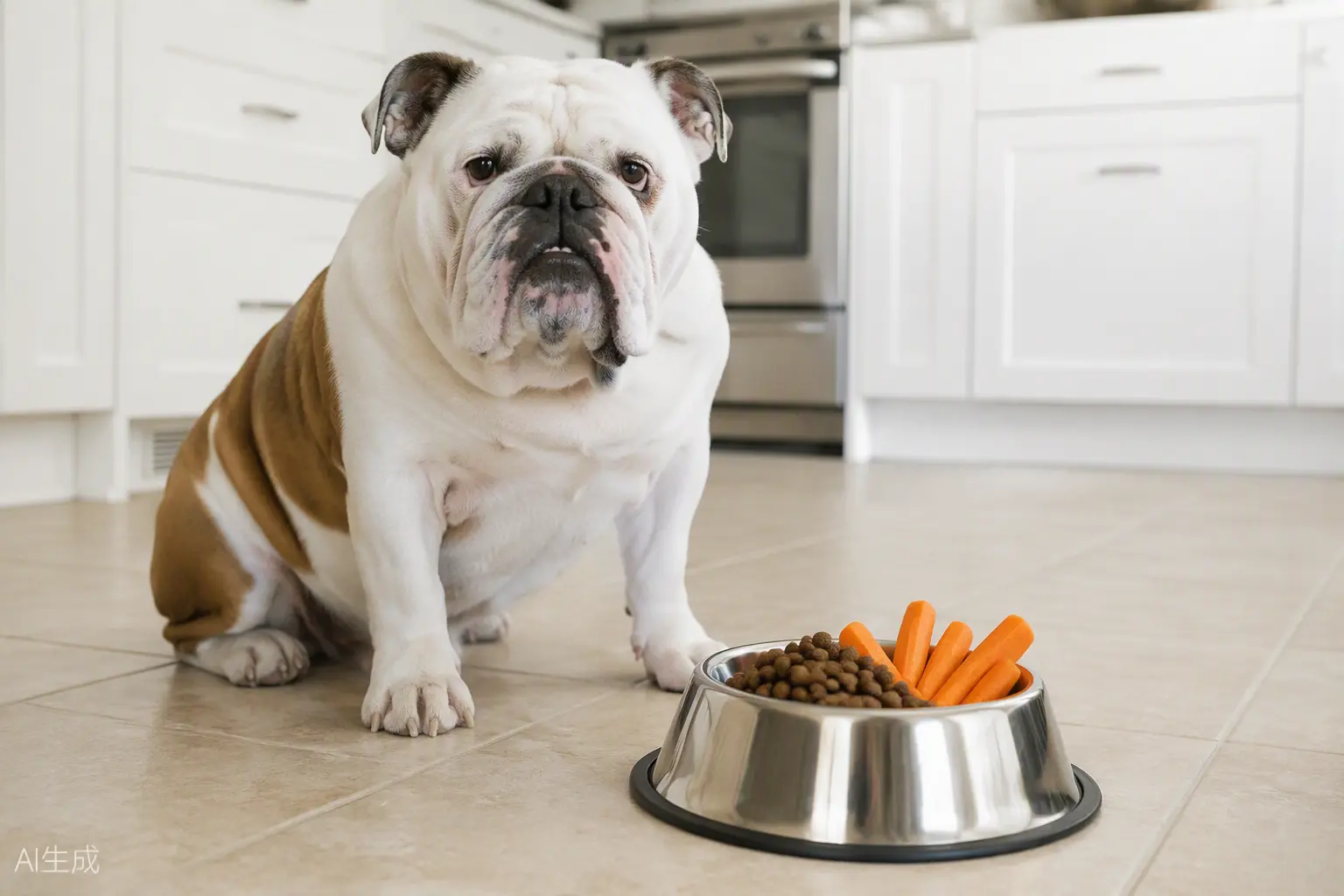
Managing Your Bulldog's Weight
The Bulldog Weight Problem — and Why It Matters
Studies consistently show that a large share of pet dogs are overweight, and bulldogs are among the most vulnerable breeds. For a dog with a compromised airway and stressed joints, extra weight is not a cosmetic issue — it directly shortens and diminishes their life. The good news: weight management is entirely within your control.
Why Extra Weight Hits Bulldogs Harder
- Breathing: Fat deposits around the chest and throat make an already narrow airway work harder.
- Joints: Every extra kilogram multiplies the load on hips, elbows, and the spine.
- Heat tolerance: Overweight bulldogs overheat faster — a genuine danger in warm weather.
- Lifespan: Studies in dogs show that lean individuals live measurably longer than overweight ones.
Is Your Bulldog Overweight?
Use the hands-on test rather than the scale alone:
- Ribs: You should be able to feel the ribs easily under a thin layer of fat, like the back of your hand.
- Waist: Viewed from above, your bulldog should have a visible waist behind the ribs.
- Tuck: From the side, the belly should tuck up toward the hind legs.
If in doubt, ask your vet for a body condition score — most clinics do this free of charge during routine visits.
Portion Control That Actually Works
- Weigh the food: “One cup” varies wildly depending on how it is scooped. A kitchen scale removes the guesswork.
- Follow the target weight, not the current weight: Feed for the weight your bulldog should be, per your vet’s guidance.
- Count everything: Treats, table scraps, dental chews, and training rewards all contain calories. Treats should make up no more than 10% of daily intake.
- Split meals: Two measured meals a day beat free-feeding every time.
- Use slow feeders: Bulldogs inhale their food; puzzle bowls slow them down and add mental stimulation.
Healthy Treat Swaps
| Instead of | Try |
|---|---|
| Commercial biscuits | Small carrot pieces |
| Cheese cubes | Green beans (fresh or frozen) |
| Fatty table scraps | Cucumber slices |
| High-calorie training treats | Blueberries or apple slices (no seeds) |
Most bulldogs care far more about the ritual of receiving a treat than about what it actually is — use that to your advantage.
Exercise: The Supporting Actor
Diet does most of the work, but gentle daily movement helps maintain muscle and metabolism. Short, regular walks and play sessions are ideal — see our guide to safe bulldog exercise, and always avoid the heat.
Conclusion
Keeping your bulldog lean is one of the greatest gifts you can give them: easier breathing, healthier joints, and more years together. Measure meals, swap treats smartly, and check their body condition monthly — small habits, big payoff.
Note: Always consult your veterinarian before putting your dog on a weight-loss plan, especially if they have existing health conditions.
Useful Resources
- Bulldog Club of America: https://bulldogclubofamerica.org/
- Bulldog Health Guide