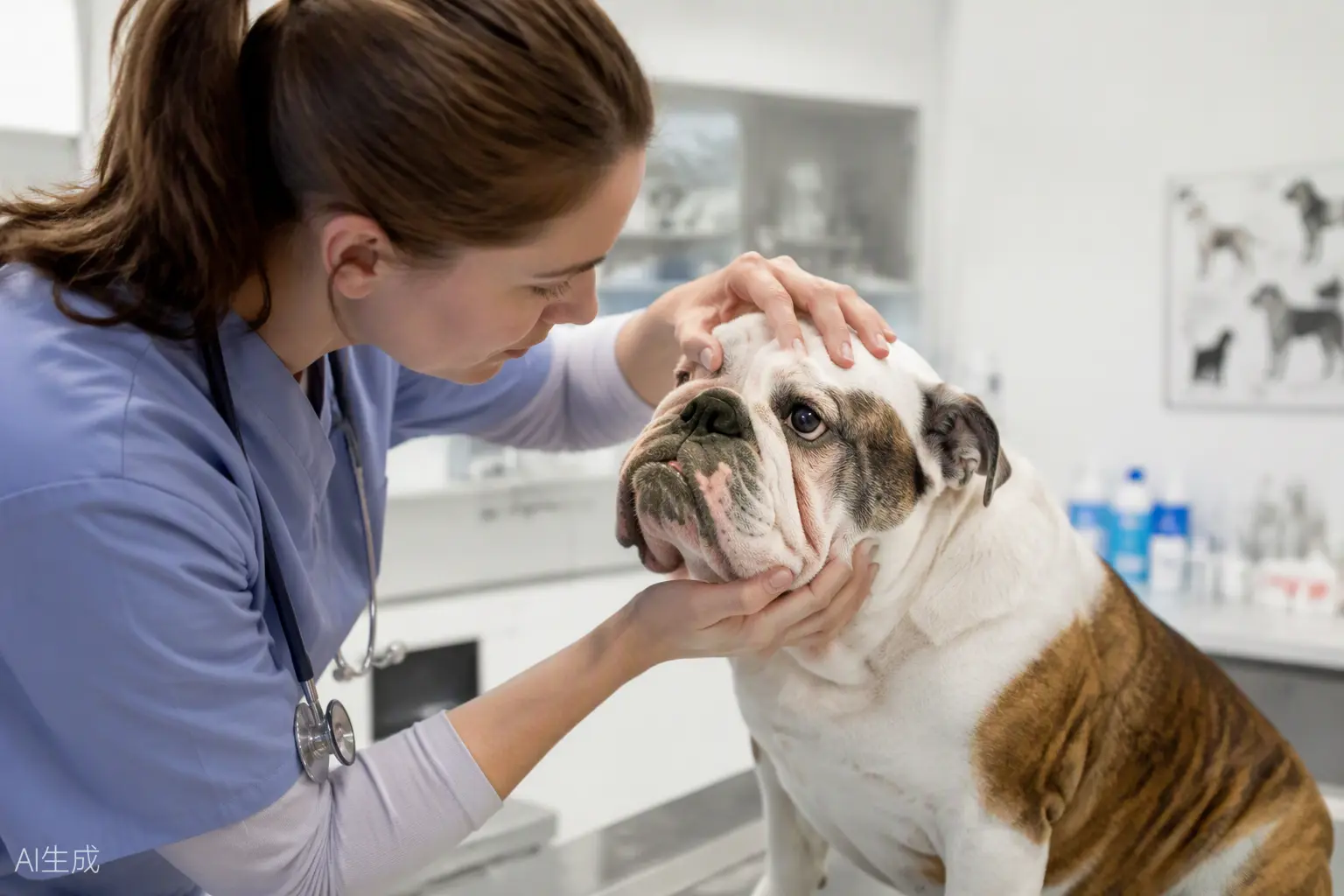
Cherry Eye in Bulldogs: Causes & Treatment
That Red Lump in Your Bulldog’s Eye: Understanding Cherry Eye
Few things alarm a bulldog owner like suddenly spotting a red, swollen mass in the corner of their dog’s eye. This condition — cherry eye — is one of the most common eye problems in the breed. The good news: it looks worse than it usually is, and it is very treatable when addressed promptly.
What Is Cherry Eye?
Dogs have a third eyelid that contains a tear-producing gland. This gland is normally anchored in place, hidden from view. In cherry eye, the connective tissue holding the gland weakens, and the gland prolapses — popping out as a smooth, red, cherry-like swelling in the inner corner of the eye.
That gland is not decorative: it produces a significant share of the eye’s tear film. Losing its function can lead to chronic dry eye later in life, which is why treatment focuses on saving the gland rather than removing it.
Why Bulldogs?
Cherry eye has a strong genetic component, and bulldogs are among the breeds most often affected, along with other brachycephalic dogs prone to breathing problems. It usually appears before two years of age, and a dog who develops it in one eye has a fair chance of developing it in the other.
Signs and Symptoms
- A smooth, round, red or pink swelling in the inner corner of the eye
- Watery discharge or excessive tearing
- Pawing at the eye or rubbing the face on furniture
- Squinting or visible irritation
Cherry eye itself is not usually painful at first, but the exposed gland can become inflamed, infected, or damaged if left untreated.
What to Do
- See your vet promptly: Cherry eye does not resolve on its own, and earlier treatment means better outcomes.
- Prevent rubbing: A soft e-collar stops your bulldog from traumatizing the exposed gland.
- Lubricating drops: Your vet may suggest artificial tears to keep the eye comfortable until treatment.
Treatment Options
- Surgical repositioning: The gold standard. The vet tucks the gland back into place and secures it, preserving tear production. Success rates are high, though recurrence happens in a minority of cases.
- Gland removal: Once common, now discouraged except as a last resort — removing the gland dramatically increases the risk of dry eye (keratoconjunctivitis sicca), a painful lifelong condition.
- Medical management alone: Anti-inflammatory drops can reduce swelling temporarily, but they do not fix the prolapse.
Can Cherry Eye Be Prevented?
Because the underlying weakness is genetic, there is no reliable prevention. Responsible breeders avoid breeding affected dogs. As an owner, the best strategy is simply vigilance: check your bulldog’s eyes during your regular grooming routine and act quickly if a prolapse appears.
Conclusion
Cherry eye is startling to look at but straightforward to treat. See your vet early, choose gland-preserving surgery, and keep an eye on the other eye — most bulldogs recover quickly and go right back to their cheerful, snorting selves.
Note: Any sudden eye change warrants a veterinary visit. This article is for general information and is not a substitute for professional diagnosis.
Useful Resources
- Bulldog Club of America: https://bulldogclubofamerica.org/
- Bulldog Health Guide