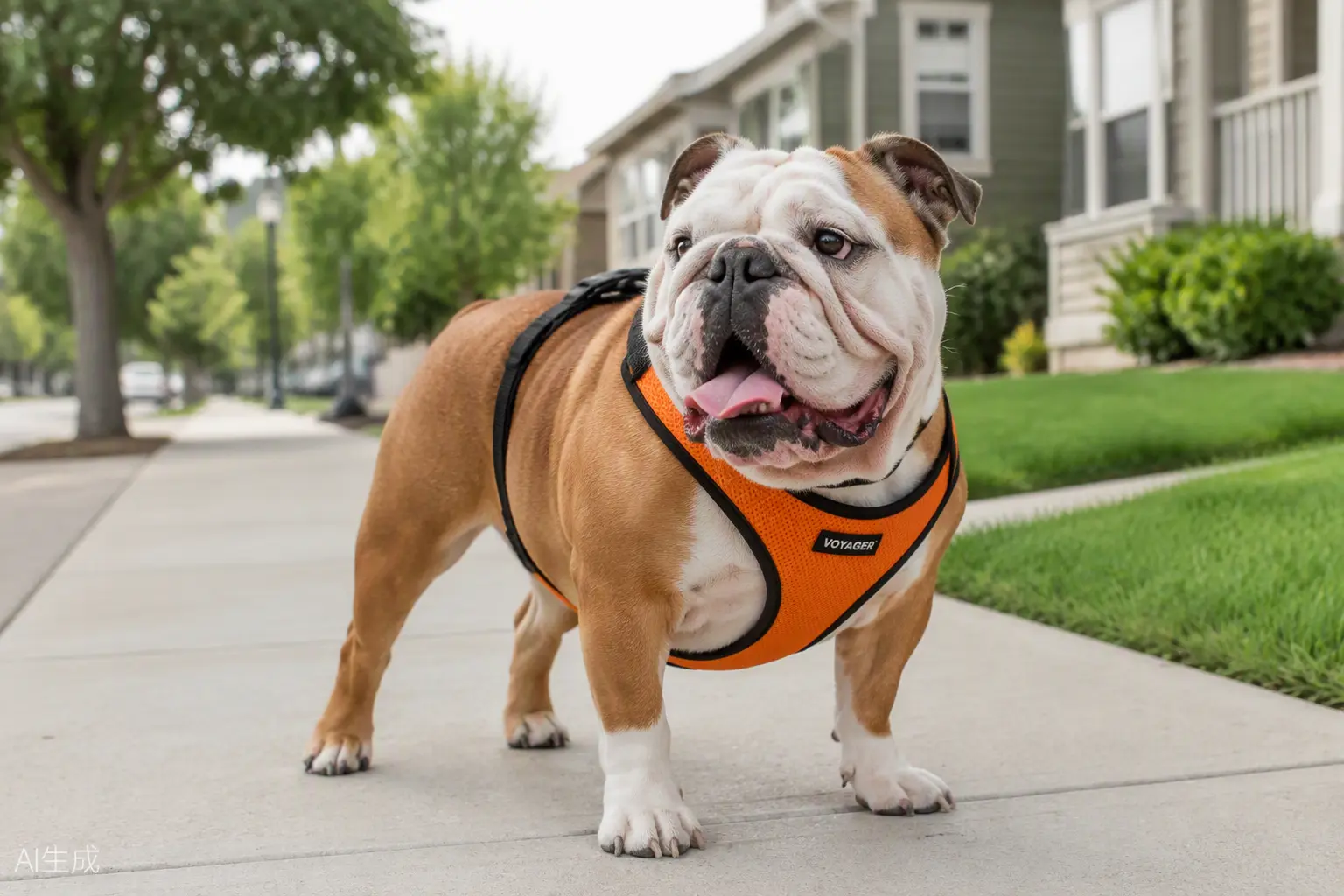
Choosing the Right Bulldog Harness
Why Your Bulldog Should Wear a Harness, Not a Collar
Bulldogs have thick necks, narrow windpipes, and a talent for pulling in exactly the wrong direction at the wrong time. A collar concentrates all that force directly on the trachea — dangerous for a breed already prone to breathing problems. A well-chosen harness is one of the simplest health upgrades you can make for your bulldog.
Collar vs. Harness: The Key Difference
- Collars put pressure on the neck and windpipe. For a brachycephalic breed with a tendency toward tracheal issues, that pressure can cause real harm — from coughing fits to long-term damage.
- Harnesses distribute force across the chest and shoulders, keeping the airway completely free.
Collars still have their place — for ID tags — but the leash should always attach to a harness.
What to Look For in a Bulldog Harness
Bulldogs have a distinctive build: broad chest, thick neck, short back. That rules out many generic designs. Look for:
- A Y-shaped front: This design keeps the shoulders free to move and avoids pressure on the throat, unlike straight-across “no-pull” straps that restrict the gait.
- Wide, padded chest plate: Spreads pressure comfortably over the sternum.
- Multiple adjustment points: Bulldogs rarely fit standard sizing, so adjustable neck and chest straps are essential.
- Sturdy back attachment: A strong D-ring positioned between the shoulders gives you good control without twisting the harness.
- Breathable materials: Mesh panels help a heat-sensitive breed stay cooler on walks.
Measuring for the Perfect Fit
An ill-fitting harness chafes, slips, or restricts movement. Measure your bulldog before buying:
- Chest girth: Around the widest part of the ribcage, just behind the front legs — the most important measurement.
- Neck girth: Around the base of the neck where a collar would sit.
- Back length: From the base of the neck to the base of the tail (for sizing reference).
Once fitted, you should be able to slide two fingers under each strap — snug but not tight. Check for rubbing under the front legs after the first few walks.
Common Harness Mistakes to Avoid
- Buying by weight alone: Two 25 kg bulldogs can have completely different proportions. Always measure.
- Choosing style over function: Cute but flimsy fashion harnesses rarely survive a determined bulldog.
- Leaving it on all day: Harnesses can trap moisture against the skin and cause irritation in the armpits and chest folds. Take it off at home.
- Never adjusting the fit: Puppies grow and adult weights fluctuate — recheck the fit every few months.
Conclusion
A good harness protects your bulldog’s airway, gives you better control, and makes walks more comfortable for both of you. Measure carefully, choose a Y-front design with padding and adjustability, and check the fit regularly — your bulldog’s neck will thank you.
Note: If your bulldog pulls excessively or shows signs of discomfort in any harness, ask your veterinarian or a qualified trainer for fitting advice.
Useful Resources
- Bulldog Club of America: https://bulldogclubofamerica.org/
- Bulldog Health Guide